

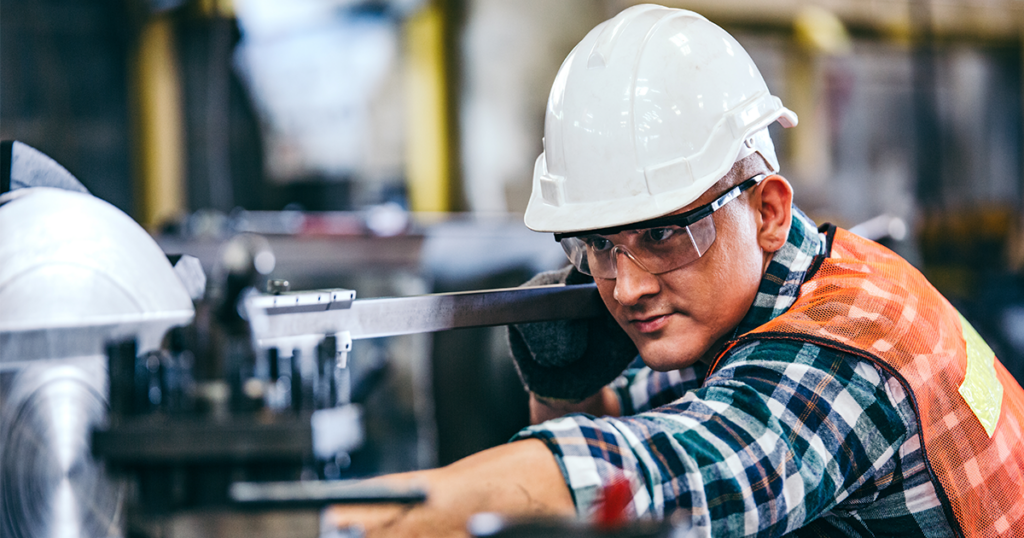
As the 2026 USMCA joint review gets underway, many U.S. companies are taking a fresh look at nearshoring to Mexico. Moving manufacturing to Mexico can offer major advantages for U.S. companies. Mexico’s proximity to the United States and lower labor costs are part of the appeal, but one of the biggest benefits is that qualifying goods may receive preferential tariff treatment under USMCA if they meet the agreement’s rules of origin.
Benefits of USMCA
The USMCA, or United States-Mexico Canada Agreement, replaced NAFTA in 2020. It offers the ability to manufacture goods using originated and non-originated materials. It allows goods to move between the three countries with lower or zero tariffs. To comply with USMCA, companies must:
- Ensure the product qualifies as originating under the applicable USMCA rules of origin.
- Comply with the product-specific rules of origin, which may require a tariff shift, a Regional Value Content threshold, or both.
- Provide certification of origin and keep origin-related records
IMMEX program and VAT certification
Mexico offers two export programs that attract investment. First is the IMMEX Program. The Ministry of Economy authorizes companies to perform manufacturing, repair, and other activities in the country. This allows the temporary import of raw materials and machinery from a foreign country without paying import duties.
The second program is VAT Certification, by which the Mexican IRS allows companies to avoid paying VAT (Value-Added Tax) on temporarily imported machinery and raw materials under the IMMEX Program. VAT is a type of sales tax added at different stages of producing and selling a product.
Maquiladoras
Mexico’s Income Tax Law provides a set of rules that allow foreign companies to avoid the risk of creating a taxable presence — i.e., a permanent establishment — in Mexico. To benefit from this regime, the majority of the company’s income must be derived from maquila (manufacturing) operations, although up to 10% may come from related activities. In addition, the foreign company is required to provide at least 30% of the machinery and equipment used in the operation, and all finished goods must be exported.
Rather than determining taxable income based on actual revenues, the regime applies a “safe harbor” methodology. Under this approach, taxable income is calculated as the higher of 6.9% of the total value of assets used in the maquila operation or 6.5% of its total operating costs and expenses. This mechanism provides a simplified and predictable basis for compliance while reducing the risk of triggering a permanent establishment in Mexico.
Shelter Maquiladoras
For U.S. companies pursuing nearshoring strategies in Mexico, a shelter maquiladora model can provide a faster, lower-risk entry into manufacturing operations. Under this structure, the foreign company partners with an established Mexican service provider that assumes responsibility for a significant portion of the local administrative, regulatory, and compliance functions, allowing the foreign company to focus primarily on its core manufacturing activities.
Key benefits
- Foreign companies can contribute machinery, raw materials, technical expertise, and production standards while retaining full ownership of these assets.
- The shelter provider typically oversees key local obligations, including tax compliance, labor matters, regulatory filings, and day-to-day administrative functions.
- This model may help mitigate the risk of constituting a permanent establishment in Mexico, reducing potential local tax exposure.
How a shelter maquiladora differs from other structures
Under a traditional maquila structure, a foreign company typically established and operates through its own Mexican subsidiary and complies directly with applicable IMMEX program requirements, as well as applicable safe harbor rules. By contrast, under a shelter maquiladora model, the company operates through a shelter manufacturing agreement with a local provider instead of setting up its own full operating structure in Mexico.
Another alternative is to engage a third-party manufacturing company in Mexico directly. Under this approach, possession or ownership of certain assets may be transferred, unlike in maquila or shelter maquiladora arrangements where the foreign company typically retains ownership. Depending on the details, this model may result in the creation of a permanent establishment in Mexico, along with the corresponding income tax obligations.
Other common structures
In addition to maquilas and shelter maquilas, companies may consider alternative structures, which often involve a higher level of operational and legal complexity depending on the specific business model and level of local presence.
- Safe Harbor + Domestic Sales: Similar to the maquila structure, this allows a limited level of domestic sales within Mexico. While it offers greater commercial flexibility, it also entails additional compliance and reporting requirements.
- Non-Safe Harbor Structures: This approach follows the maquila structure but without applying safe harbor provisions. It typically involves a U.S. principal and a related Mexican manufacturing entity that carries out the production and export of finished goods.
- Non-Safe Harbor + Domestic Sales: The most complex option, combining full transfer pricing requirements with local sales activities in Mexico.
The right structure depends on your goals, timeline, and risk tolerance — many companies start with a simpler model and evolve over time. Working with an international tax advisory team is key to making informed decisions based on your company’s goals.